April 19, 2026 Week 13
📡 Weekly Brief — Week 13

The AI Specialization Turn

The era of generalist models ends. GPT-Rosalind enters the drug lab. Claude Opus 4.7 introduces self-verification. Claude Design disrupts Figma. Platform disruption accelerates as the trust deficit deepens.

The AI Specialization Turn — Week 13

This Week in AI

GPT-Rosalind: AI Enters the Drug Lab

GPT-Rosalind: OpenAI Launches Specialized AI for Life Sciences

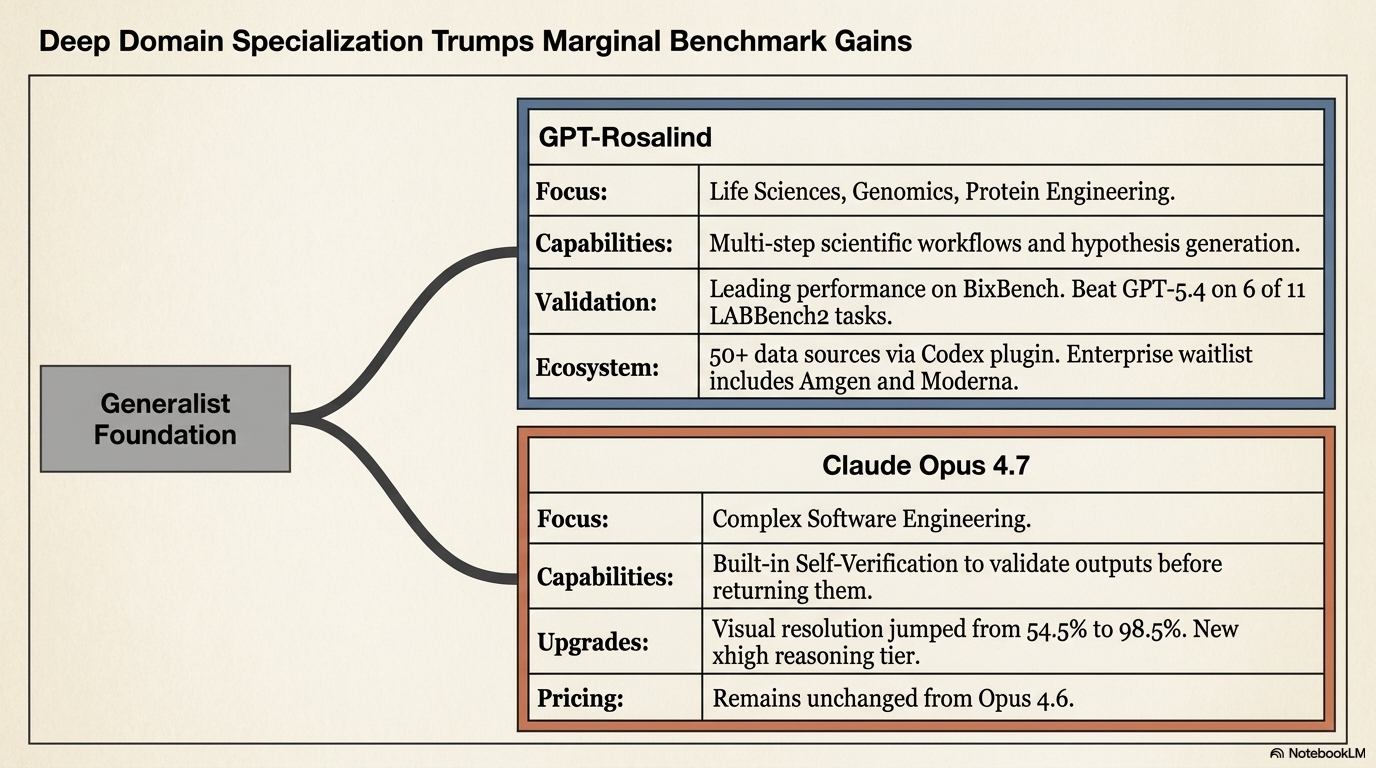
On April 16, OpenAI launched GPT-Rosalind, a frontier reasoning model purpose-built for drug discovery, genomics, and protein engineering — named after pioneering chemist Rosalind Franklin. Fine-tuned across genomics, protein engineering, and chemistry, it achieved leading BixBench performance and outperformed GPT-5.4 on 6 of 11 LABBench2 tasks. Enterprise customers include Amgen, Moderna, Allen Institute, and Thermo Fisher.

Why it Matters: This is the clearest signal yet that the era of one-size-fits-all frontier models is ending. Specialization at the reasoning layer is how AI crosses from general productivity into genuine scientific value. Drug discovery timelines — historically measured in decades — could compress dramatically.
📰 Read on AI Onboarded → Source: OpenAI ↗
Claude Opus 4.7: The Self-Verifying Engineer

Claude Opus 4.7: The Self-Verifying Engineer

Anthropic released Claude Opus 4.7 on April 16 — its most capable commercial model — introducing self-verification as a core feature: the model checks its own outputs before returning them. Visual resolution jumped from 54.5% to 98.5%. New 'xhigh' reasoning effort level. First model with automated cybersecurity safeguards. Pricing unchanged from Opus 4.6.

Why it Matters: Self-verification moves responsibility for output quality from the human reviewer to the model itself — a prerequisite for true agentic autonomy. The visual acuity jump from 54.5% to 98.5% unlocks new categories: architecture diagrams, visual codebases, complex interfaces.
📰 Read on AI Onboarded → Source: Anthropic ↗
Claude Design Takes Aim at Figma & Adobe

Claude Design: Anthropic Takes Aim at Figma and Adobe

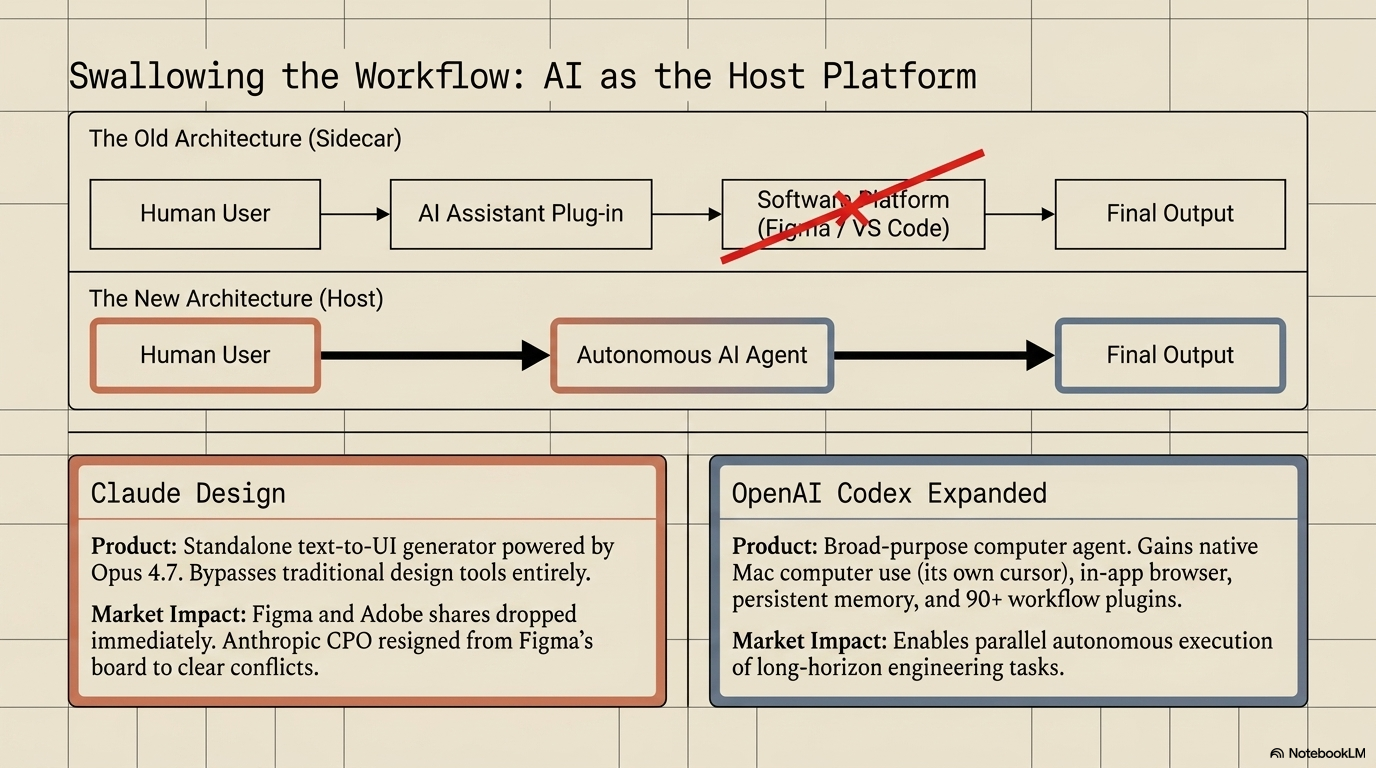
Anthropic launched Claude Design on April 17, a standalone product powered by Opus 4.7 that turns natural language prompts into complete, interactive UI prototypes, presentations, and marketing materials. Users can upload codebases and design files for automatic design system application. Anthropic CPO Mike Krieger resigned from Figma's board. Figma and Adobe shares dropped on the news.

Why it Matters: Design tools are the latest SaaS category to face structural disruption from AI. Claude Design doesn't just assist designers — it makes Figma's primary value proposition accessible without Figma. The Krieger board resignation signals Anthropic is playing to win.
📰 Read on AI Onboarded → Source: VentureBeat ↗
Codex Expands Beyond Code

Codex for (Almost) Everything: Agent Expands Beyond Code

OpenAI released a major update to its Codex desktop app on April 16, transforming it from coding assistant to broad-purpose computer agent with native Mac computer use (its own cursor), in-app browser, persistent memory, and 90+ new plugins including Atlassian Rovo, CircleCI, GitLab Issues. Codex can now schedule future work across days or weeks autonomously.

Why it Matters: The gap between 'coding assistant' and 'autonomous agent' has closed in one update. The scheduling and memory features separate this from prior agentic demos — Codex can own and execute long-horizon tasks without constant human re-engagement.
📰 Read on AI Onboarded → Source: OpenAI ↗

Key Diagrams & Visuals

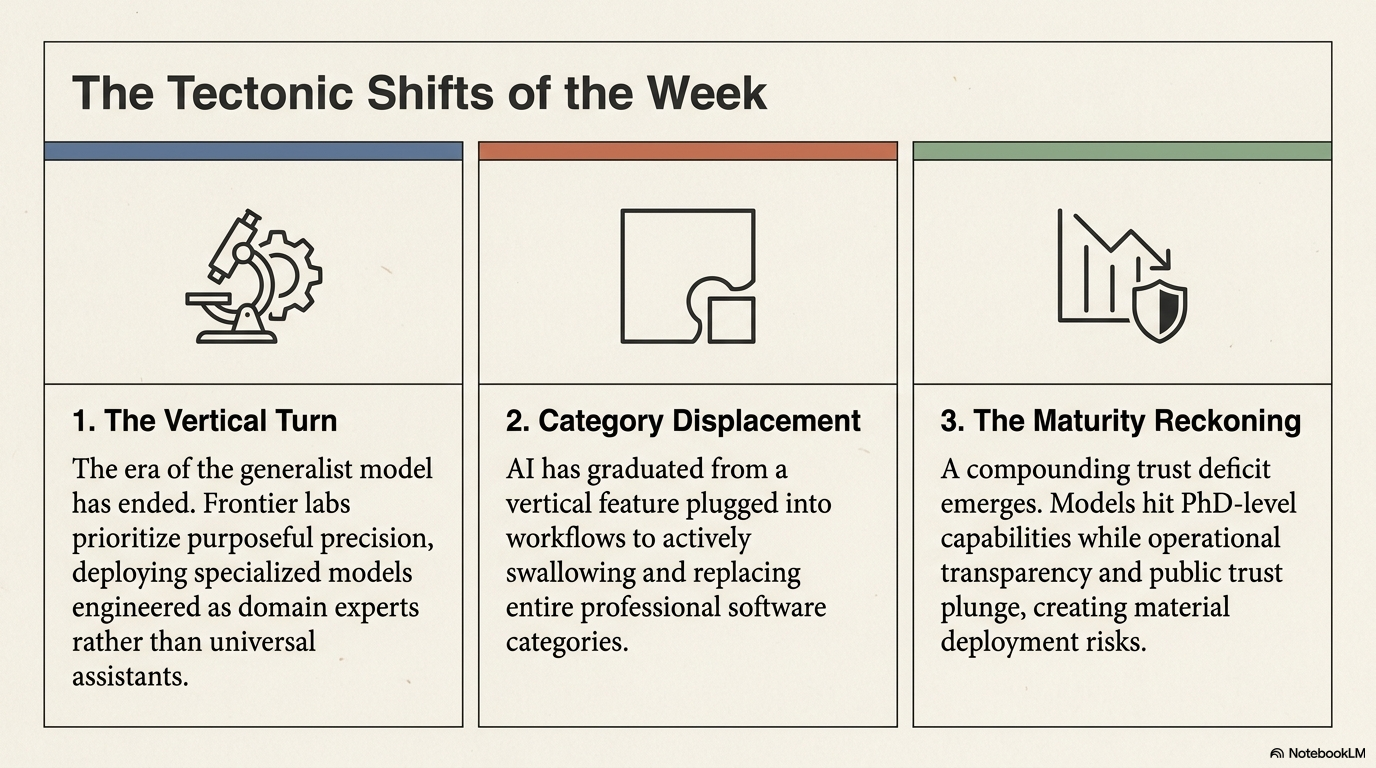
The Tectonic Shifts of the Week
The Tectonic Shifts: The Vertical Turn (specialized models replace generalists), Category Displacement (AI swallows entire SaaS categories), and The Maturity Reckoning (trust deficit deepens as capabilities surge).
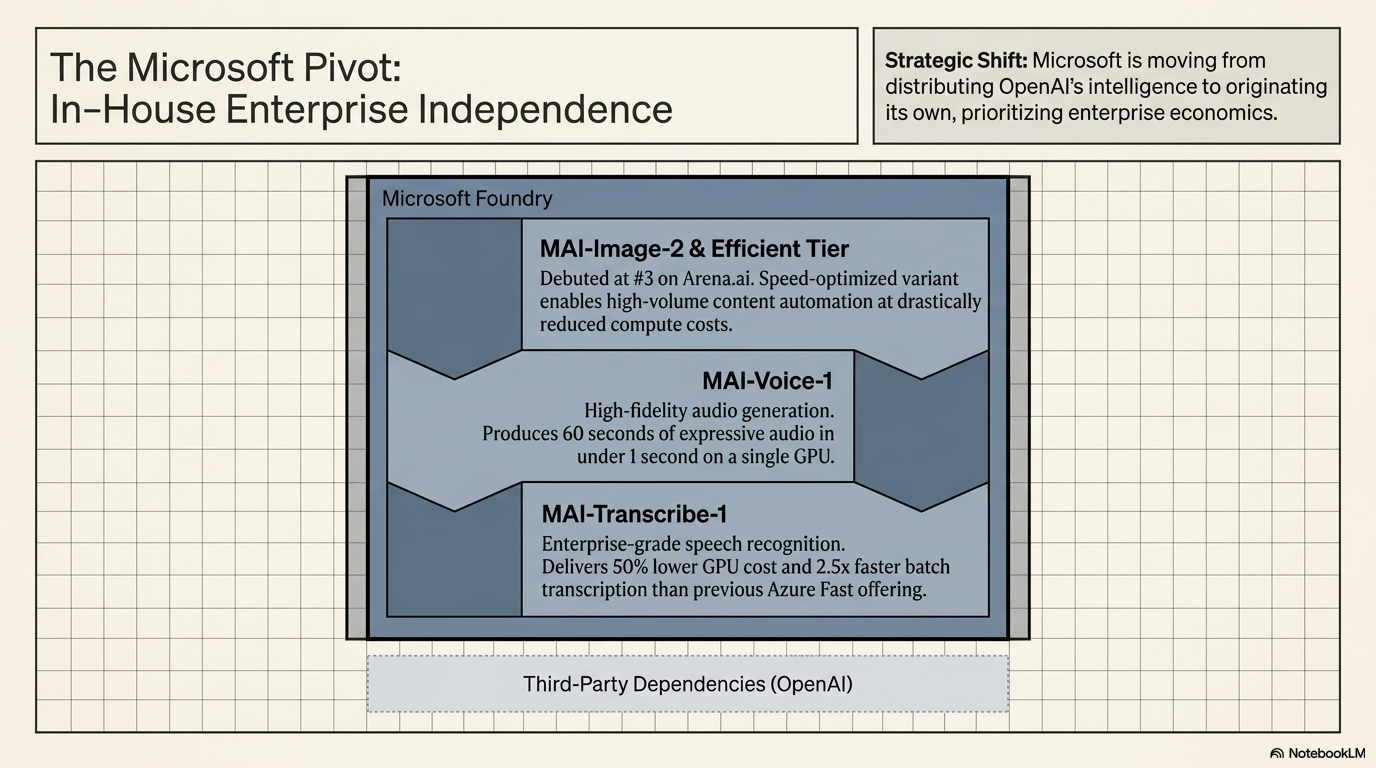
The Microsoft Pivot
The Microsoft Pivot: In-House Enterprise Independence — MAI-Image-2, MAI-Voice-1, and MAI-Transcribe-1 represent Microsoft building its own frontier capabilities through Foundry, reducing OpenAI dependency.
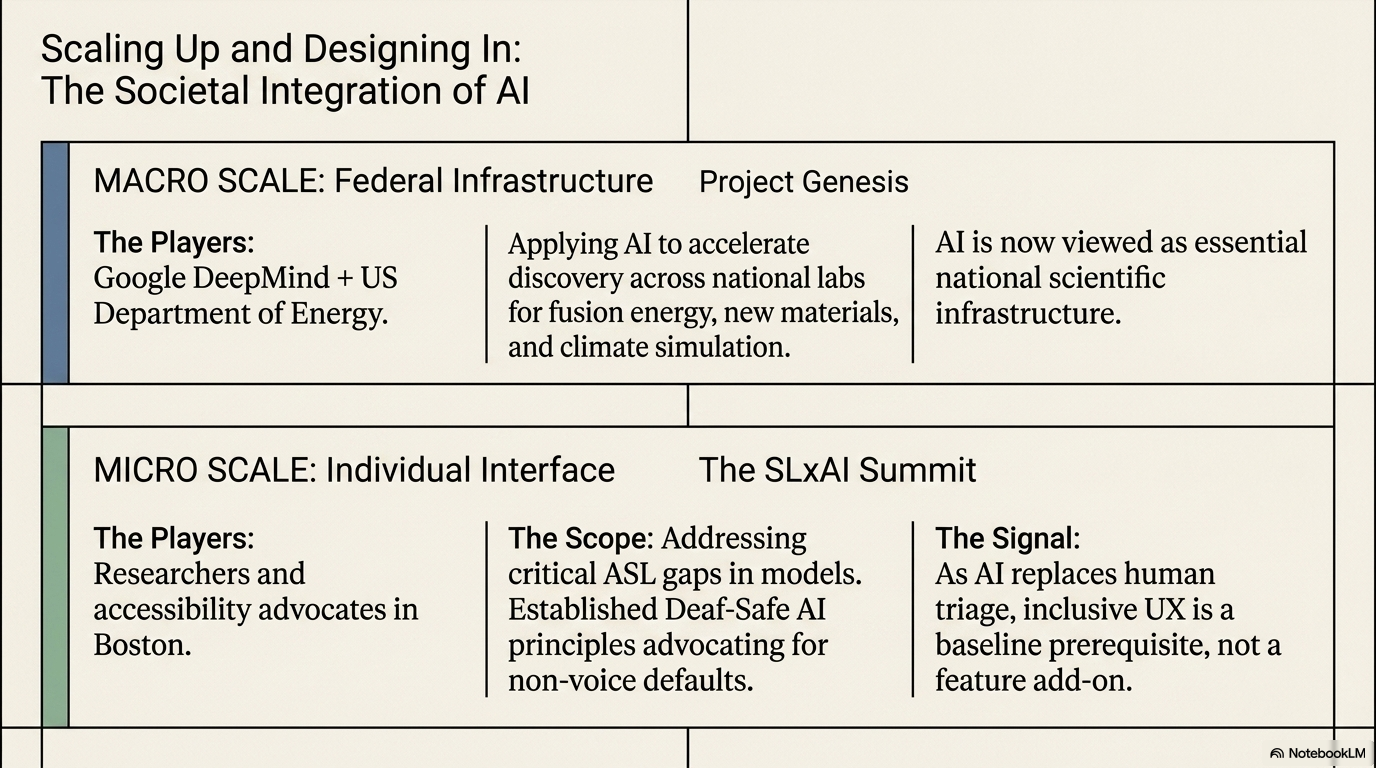
Societal Integration of AI
Scaling Up and Designing In: Project Genesis deploys AI at national labs for fusion energy and climate simulation. The SLxAI Summit establishes 'Deaf-Safe' AI principles for inclusive design.
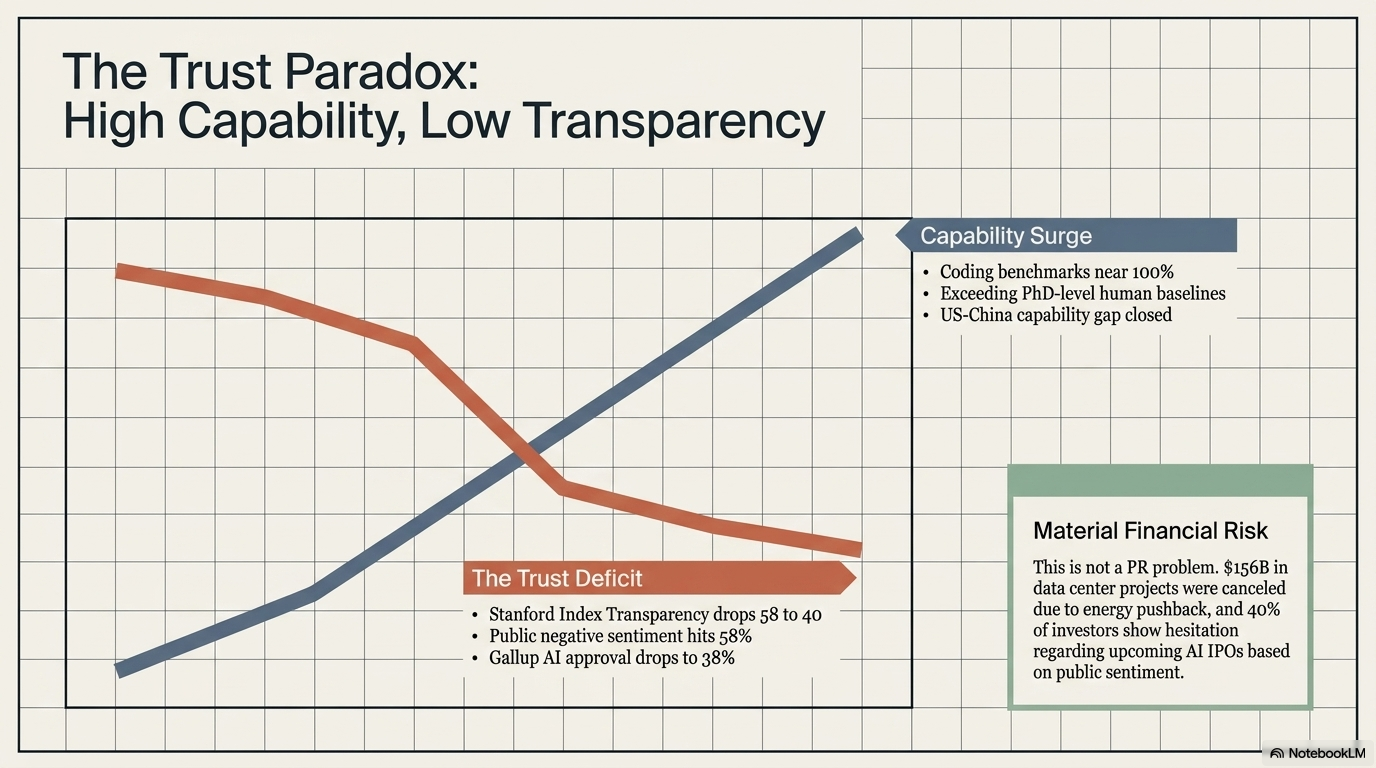
The Trust Paradox
The Trust Paradox: Capability surges (coding benchmarks near 100%, PhD-level baselines) while transparency drops from 58 to 40, negative public sentiment hits 58%, and $156B in data center projects face cancellation.
The Ideological Rivalry
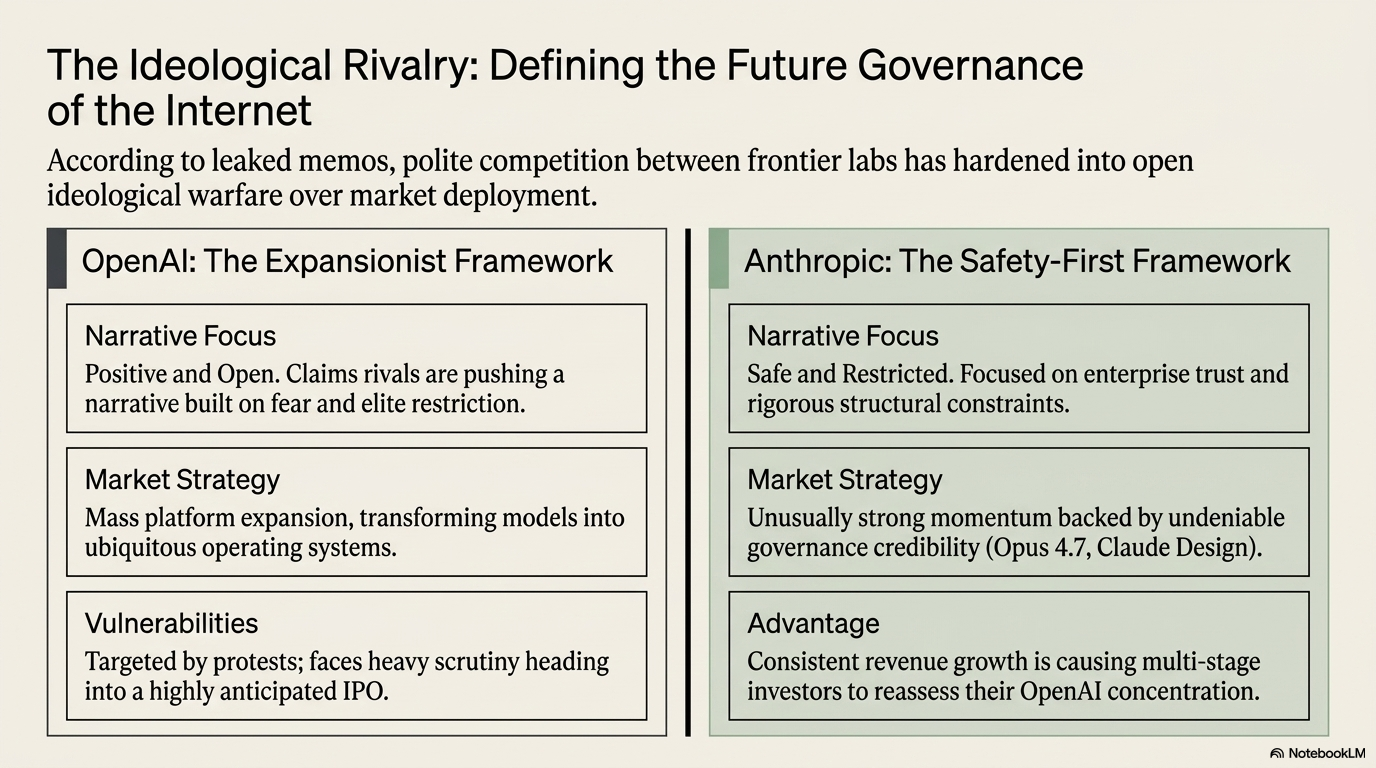
The Ideological Rivalry: OpenAI's expansionist framework (positive and open, mass platform expansion) vs. Anthropic's safety-first framework (enterprise trust, governance credibility). Competition hardens from polite to openly adversarial.
Agent Value Multiple
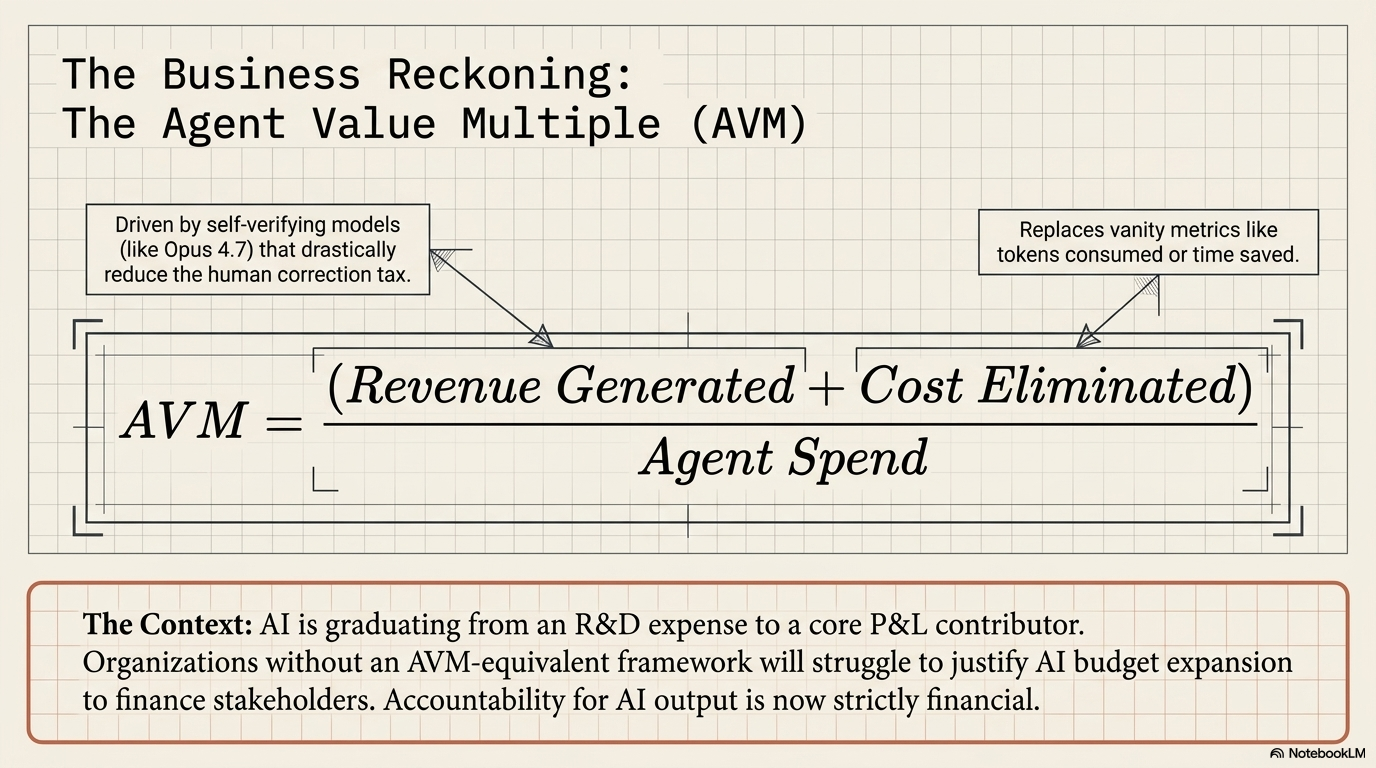
The Agent Value Multiple (AVM): A new economic metric replacing 'time saved' as AI's primary ROI measure. AVM = (Revenue Generated + Cost Eliminated) / Agent Spend. AI graduates from innovation expense to core P&L contributor.
Practitioner Toolkit
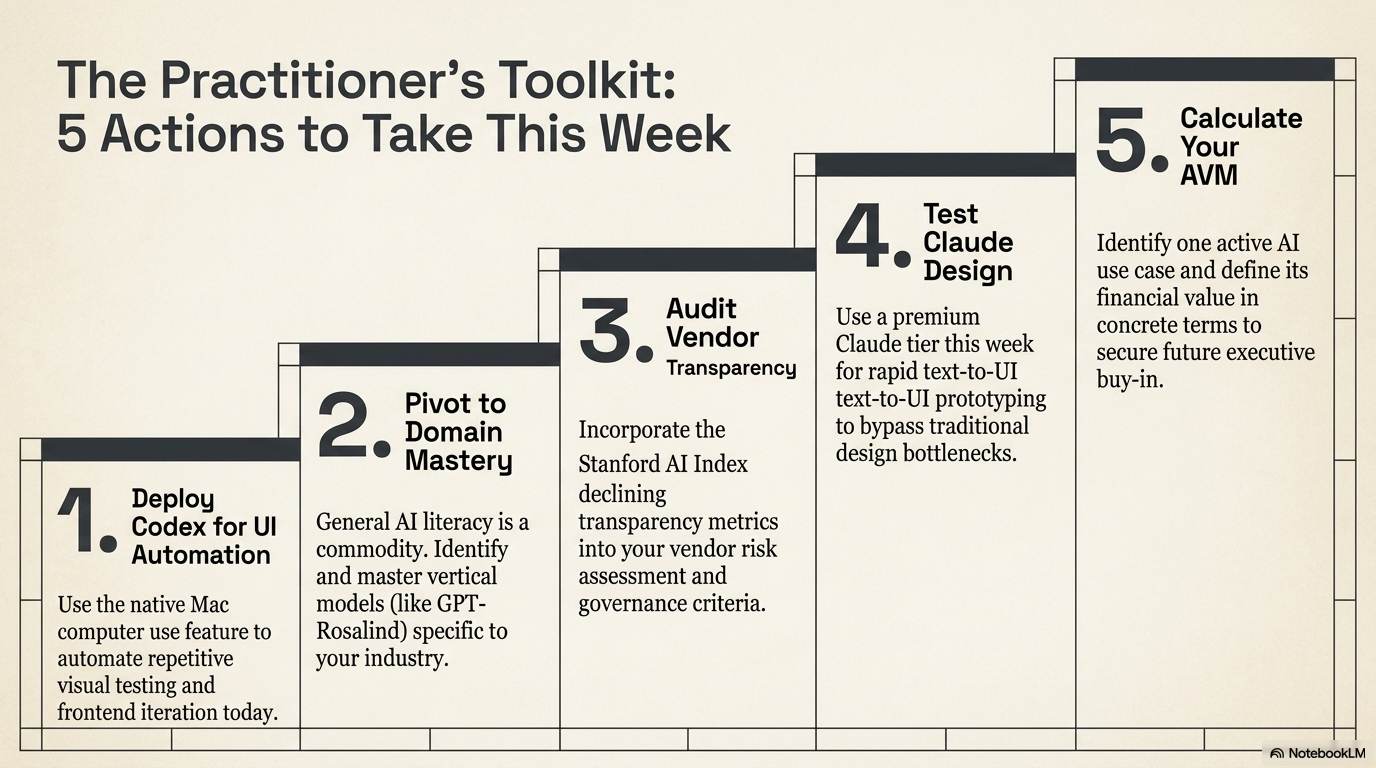
The Practitioner's Toolkit: 5 actions for the week — Deploy Codex for UI automation, Pivot to domain mastery, Audit vendor transparency, Test Claude Design, Calculate your AVM.
What to Watch Next Week
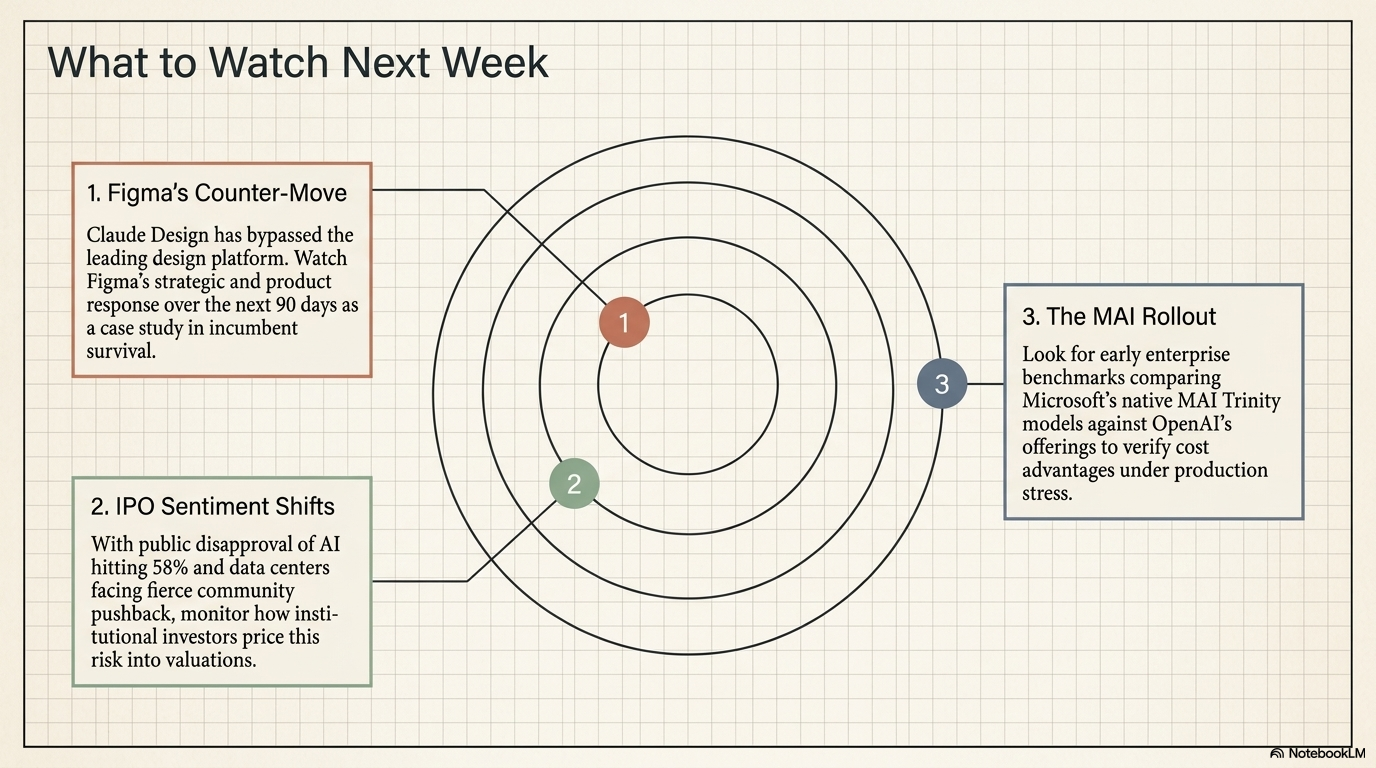
What to Watch Next Week: (1) Figma's counter-move to Claude Design, (2) IPO sentiment shifts with 58% public disapproval, (3) Microsoft MAI Trinity enterprise benchmarks vs. OpenAI's offerings.

Rapid Industry Updates

🔵

Gemini 3.1 Goes Real-Time

Google's Gemini 3.1 adds real-time voice and image analysis — see, hear, and respond within live interactions. KV-cache compression reduces memory 6x.

🟦

Microsoft MAI Trinity

Three new foundational models — MAI-Transcribe-1, MAI-Voice-1, MAI-Image-2 — reduce OpenAI dependency. Transcribe-1 delivers 50% lower GPU cost.

🔬

Project Genesis

Google DeepMind partners with US DOE to apply AI across Brookhaven, Oak Ridge, and Argonne labs for fusion energy, materials, and climate research.

📊

Stanford AI Index 2026

Foundation Model Transparency scores dropped from 58 to 40. Coding benchmarks near saturation. 58% of Americans view AI negatively. Gallup approval drops to 38%.

5 Takeaways for the Week

Deploy Codex's Computer Use Feature This Week

The computer use feature is production-ready for frontend iteration and visual testing today. Open the Codex desktop app, point it at a UI task, and let it operate with its own cursor. The scheduling feature automates any regular task.

🎯

Domain AI Expertise Now Beats Generalist AI Use

GPT-Rosalind and Opus 4.7 both signal the value is shifting from 'can use AI' to 'can use AI for my specific domain.' Identify the 2–3 domain-specific AI models emerging in your field and develop genuine expertise.

🛡️

Track the Transparency Score Decline

Foundation Model Transparency scores fell from 58 to 40 in a single year. Add model transparency to your vendor assessment criteria. Ask providers about training data, evaluation methodology, and known failure modes.

🛠️

Try Claude Design — It's on Your Existing Plan

If you're a Claude Pro, Max, Team, or Enterprise subscriber, Claude Design is available now. Try building a landing page or app wireframe from text prompt this week. Already production-capable for rapid prototyping.

📚

Understand Agent Value Multiple Before Competitors

The shift from 'time saved' to AVM as the primary AI ROI metric is coming. Identify one AI use case, define its financial value in concrete terms (revenue, costs, risk), and document it. This unlocks larger AI budgets.

Join Our Growing AI Community

Connect with 150+ AI enthusiasts, share insights, and stay ahead of the curve.